



Power Steering Fluid
Specified fluid: Honda Power Steering Fluid
We recommend that you check the power steering fluid level every time you refuel. Check when the engine is not running.
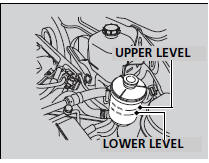
1. Look at the side of the reservoir. The fluid should be between the UPPER LEVEL and LOWER LEVEL.
2. Add power steering fluid if necessary to the UPPER LEVEL mark.
- Inspect the system for a leak. If the fluid level goes below the LOWER LEVEL frequently, have the system inspected as soon as possible.
Brake Fluid
NOTICE
Brake fluid marked DOT 5 is not compatible with your vehicle's braking system and can cause extensive damage. If the specified brake fluid is not available, you should use only DOT 3 or DOT 4 fluid from a sealed container as a temporary replacement. Using any non-Honda brake fluid can cause corrosion and decrease the longevity of the system. Have the brake system flushed and refilled with Honda Heavy Duty Brake Fluid DOT 3 as soon as possible. If the brake fluid level is at or below the MIN mark, have a dealer inspect for leaks or worn brake pads as soon as possible.
Power Steering Fluid
NOTICE
Turning the steering wheel to full left or right lock and holding it there can damage the power steering pump.
NOTICE
Pour the fluid slowly and carefully so you do not spill any. Clean up any spills immediately; it could damage components in the engine compartment.
See also:
Safety Labels
These labels are in the locations shown. They warn you of potential hazards that
could cause serious injury or death. Read these labels carefully.
If a label comes off or becomes hard to read (exce ...
Towing Your Vehicle
Your vehicle is not designed to be towed behind a motor home. If your vehicle
needs
to be towed in an emergency, refer to the emergency towing information. ...
Playing the AM/FM Radio (LX model)
Playing the AM/FM Radio (LX model)
To Play the AM/FMRadio
The ignition switch must be in the ACCESSORY (I) or ON (II) position.
Turn the system on by pushing the power/volume knob or the AM or FM ...